
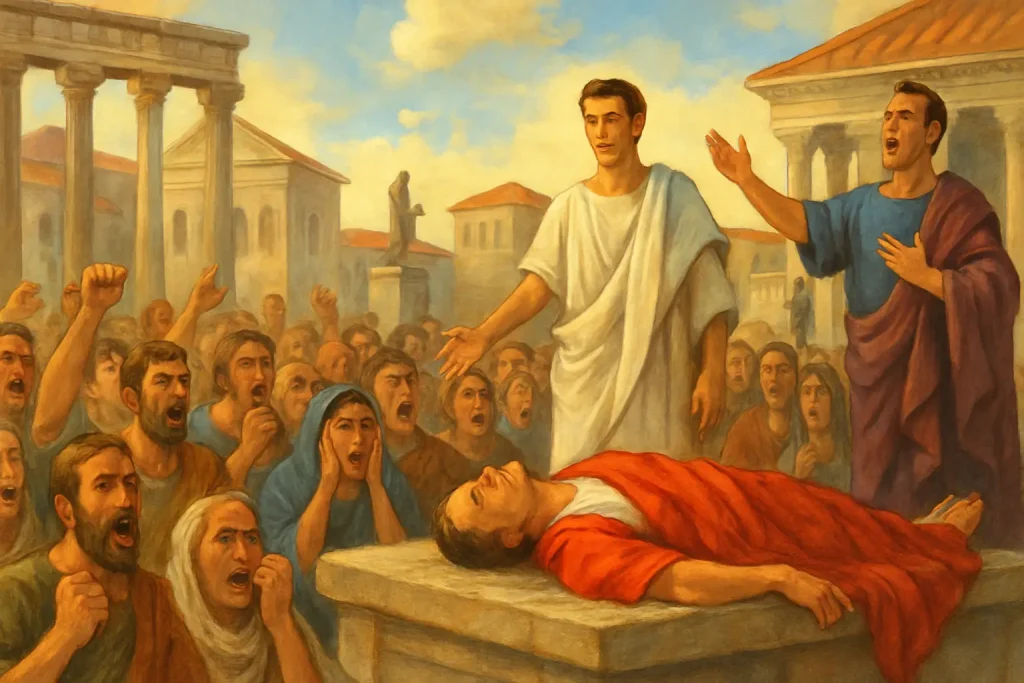
चित्र विवरण: रोम के फोरम में भीड़, मंच पर ब्रूटस और एंटनी, सीज़र का शव सामने रखा हुआ, नागरिक भावुक और क्रोधित, प्राचीन रोमन वस्त्रों में।
Act 3 Scene 2
इस दृश्य में मुख्य पात्र हैं:
ब्रूटस – सीज़र के हत्यारों में से एक, जो अपने कृत्य को रोम के भले के लिए सही ठहराता है।
एंटनी – सीज़र का मित्र, जो अपनी भावनात्मक भाषण से जनता को भड़काता है।
नागरिक – रोम के आम लोग, जो ब्रूटस और एंटनी के भाषणों से प्रभावित होते हैं और अंततः सीज़र के हत्यारों के विरुद्ध हो जाते हैं।
| Hindi | English |
|---|---|
| [रोम में। सीज़र की शवयात्रा।] | [Rome. The Forum.] |
| [भीड़, जिसमें कई नागरिक हैं, प्रवेश करते हैं।] | [Enter Citizens.] |
| प्रथम नागरिक: ब्रूटस और कासियस मंच पर जा रहे हैं। | First Citizen: The noble Brutus is ascended: silence! |
| ब्रूटस: रोमन नागरिको— | Brutus: Be patient till the last. |
| ब्रूटस: सुनो, रोमन; देशवासियो; मित्रो! | Brutus: Romans, countrymen, and lovers! hear me for my cause, and be silent, that you may hear: believe me for mine honour, and have respect to mine honour, that you may believe: censure me in your wisdom, and awake your senses, that you may the better judge. |
| ब्रूटस: यदि मेरे मित्र सीज़र के लिए कोई प्रिय था, तो वह जान ले कि ब्रूटस उससे भी अधिक प्रिय था। | Brutus: If there be any in this assembly, any dear friend of Caesar’s, to him I say, that Brutus’ love to Caesar was no less than his. |
| ब्रूटस: यदि फिर वह पूछे कि ब्रूटस ने सीज़र को क्यों मारा, तो यह मेरा उत्तर है: न कि मैं सीज़र से कम प्रेम करता था, बल्कि मैं रोम से अधिक प्रेम करता था। | Brutus: If then that friend demand why Brutus rose against Caesar, this is my answer:—Not that I loved Caesar less, but that I loved Rome more. |
| ब्रूटस: क्या तुम सीज़र को जीवित देखना चाहते थे और सभी गुलाम बनना चाहते थे? या सीज़र को मरते देखना चाहते थे और सभी स्वतंत्र रहना चाहते थे? | Brutus: Had you rather Caesar were living, and die all slaves, than that Caesar were dead, to live all free men? |
| ब्रूटस: मैंने सीज़र से प्रेम किया, इसलिए रोया; उसके भाग्य पर, इसलिए प्रसन्न हुआ; उसकी वीरता पर, इसलिए सम्मान किया; लेकिन उसकी महत्वाकांक्षा पर, इसलिए उसे मारा। | Brutus: As Caesar loved me, I weep for him; as he was fortunate, I rejoice at it; as he was valiant, I honour him: but, as he was ambitious, I slew him. |
| ब्रूटस: आँसू उसके प्रेम के लिए हैं; हर्ष उसके भाग्य के लिए; सम्मान उसकी वीरता के लिए; और मृत्यु उसकी महत्वाकांक्षा के लिए। | Brutus: There is tears for his love; joy for his fortune; honour for his valour; and death for his ambition. |
| ब्रूटस: यदि किसी ने अपराध किया हो, तो बोलो; क्योंकि मैं ब्रूटस के समान ही उसके लिए तैयार हूँ। | Brutus: Who is here so base that would be a bondman? If any, speak; for him have I offended. |
| ब्रूटस: कौन है यहाँ इतना नीच कि वह गुलाम बनना चाहता है? यदि कोई है, तो बोलो; क्योंकि मैंने उसी का अपमान किया है। | Brutus: Who is here so rude that would not be a Roman? If any, speak; for him have I offended. |
| ब्रूटस: कौन है यहाँ इतना स्वार्थी कि वह अपने देश से प्रेम नहीं करता? यदि कोई है, तो बोलो; क्योंकि मैंने उसी का अपमान किया है। | Brutus: Who is here so vile that will not love his country? If any, speak; for him have I offended. |
| ब्रूटस: मैं उत्तर की प्रतीक्षा करता हूँ। | Brutus: I pause for a reply. |
| सभी नागरिक: कोई नहीं, ब्रूटस, कोई नहीं। | All Citizens: None, Brutus, none. |
| ब्रूटस: तब मैंने किसी का अपमान नहीं किया। मैंने सीज़र को उसके महत्वाकांक्षा के कारण मारा, और तुम्हारे लिए, रोमवासियो, मेरे पास वही खंजर है जो सीज़र के लिए था, जब भी रोम को मेरी मृत्यु की आवश्यकता हो। | Brutus: Then none have I offended. I have done no more to Caesar than you shall do to Brutus. The question of his death is enrolled in the Capitol; his glory not extenuated, wherein he was worthy, nor his offences enforced, for which he suffered death. |
| प्रथम नागरिक: ब्रूटस को जीवित रखो! ब्रूटस को समृद्धि मिले! | First Citizen: Live, Brutus! live, live! |
| सभी नागरिक: ब्रूटस को समृद्धि मिले! ब्रूटस को समृद्धि मिले! | All Citizens: Live, Brutus! live, live! |
| प्रथम नागरिक: ब्रूटस को सीज़र होना चाहिए! | First Citizen: Bring him with triumph home unto his house. |
| द्वितीय नागरिक: ब्रूटस को सीज़र होना चाहिए! | Second Citizen: Give him a statue with his ancestors. |
| तृतीय नागरिक: ब्रूटस को सीज़र होना चाहिए! | Third Citizen: Let him be Caesar. |
| चौथा नागरिक: ब्रूटस को सीज़र होना चाहिए! | Fourth Citizen: Caesar’s better parts shall be crown’d in Brutus. |
| प्रथम नागरिक: हम ब्रूटस को ताज पहनाएँगे! | First Citizen: We’ll bring him to his house with shouts and clamours. |
| ब्रूटस: मेरे अच्छे देशवासियो— | Brutus: My countrymen— |
| द्वितीय नागरिक: शांत हो जाओ! शांत हो जाओ! | Second Citizen: Peace, silence! Brutus speaks. |
| प्रथम नागरिक: शांति, ब्रूटस बोलता है। | First Citizen: Peace, ho! |
| ब्रूटस: अच्छे मित्रो, मेरे लिए कोई मित्र नहीं है, जो मेरे लिए अधिक प्रिय हो। | Brutus: Good countrymen, let me depart alone, and, for my sake, stay here with Antony: do grace to Caesar’s corpse, and grace his speech tending to Caesar’s glories; which Mark Antony, by our permission, is allow’d to make. |
| ब्रूटस: मैं तुम्हें छोड़ता हूँ; और, मेरे लिए, यहाँ एंटनी के साथ ठहरो: सीज़र के शव का सम्मान करो, और उसकी प्रशंसा में एंटनी की बात सुनो, जिसे हमने अनुमति दी है। | Brutus: I do entreat you, not a man depart, save I alone, till Antony have spoke. |
| [ब्रूटस मंच से जाता है।] | [Exit Brutus.] |
| प्रथम नागरिक: रहो, और एंटनी की बात सुनो। | First Citizen: Stay, ho! and let us hear Mark Antony. |
| द्वितीय नागरिक: चलो, चुप रहो, एंटनी बोलता है। | Second Citizen: Let’s stay and hear the will. |
| [एंटनी मंच पर आता है, सीज़र का शव लिए हुए।] | [Enter Antony, with Caesar’s body.] |
| तीसरा नागरिक: शांति, शांति! | Third Citizen: Peace, ho! let us hear him. |
| एंटनी: मित्रो, रोमन नागरिको, देशवासियो, मुझे सुनो; मैं सीज़र की प्रशंसा करने नहीं आया, बल्कि उसे दफनाने आया हूँ। | Antony: Friends, Romans, countrymen, lend me your ears; I come to bury Caesar, not to praise him. |
| एंटनी: बुराई जो मनुष्य करते हैं, वह उनके बाद जीवित रहती है; भलाई अक्सर उनकी हड्डियों के साथ दफन हो जाती है; ऐसा ही सीज़र के साथ भी हो। | Antony: The evil that men do lives after them; The good is oft interred with their bones; So let it be with Caesar. |
| एंटनी: महान ब्रूटस ने तुम्हें बताया कि सीज़र महत्वाकांक्षी था; यदि यह सच है, तो यह एक गंभीर दोष था, और सीज़र ने इसके लिए गंभीरता से उत्तर दिया। | Antony: The noble Brutus hath told you Caesar was ambitious: If it were so, it was a grievous fault, And grievously hath Caesar answer’d it. |
| एंटनी: यहाँ, ब्रूटस और बाकी सबके अनुमोदन के साथ, क्योंकि ब्रूटस एक सम्मानित व्यक्ति है; वे सभी सम्मानित व्यक्ति हैं;—मैं यहाँ सीज़र के शव के साथ आया हूँ। | Antony: Here, under leave of Brutus and the rest—For Brutus is an honourable man; So are they all, all honourable men—Come I to speak in Caesar’s funeral. |
| एंटनी: वह मेरा मित्र था, वफादार और न्यायप्रिय; लेकिन ब्रूटस कहता है कि वह महत्वाकांक्षी था; और ब्रूटस एक सम्मानित व्यक्ति है। | Antony: He was my friend, faithful and just to me: But Brutus says he was ambitious; And Brutus is an honourable man. |
| एंटनी: उसने कई कैदियों को रोम लाया, जिनकी फिरौती से आम खजाना भर गया; क्या यह महत्वाकांक्षा थी? | Antony: He hath brought many captives home to Rome, Whose ransoms did the general coffers fill: Did this in Caesar seem ambitious? |
| एंटनी: जब गरीबों ने रोया, सीज़र ने भी रोया; महत्वाकांक्षा तो कठोर होनी चाहिए; लेकिन ब्रूटस कहता है कि वह महत्वाकांक्षी था; और ब्रूटस एक सम्मानित व्यक्ति है। | Antony: When that the poor have cried, Caesar hath wept: Ambition should be made of sterner stuff: Yet Brutus says he was ambitious; And Brutus is an honourable man. |
| एंटनी: तुम सब ने देखा कि लुपरकाल में मैंने उसे ताज तीन बार प्रस्तुत किया, जिसे उसने तीन बार अस्वीकार किया; क्या यह महत्वाकांक्षा थी? | Antony: You all did see that on the Lupercal I thrice presented him a kingly crown, Which he did thrice refuse: was this ambition? |
| एंटनी: फिर भी ब्रूटस कहता है कि वह महत्वाकांक्षी था; और निस्संदेह, वह एक सम्मानित व्यक्ति है। | Antony: Yet Brutus says he was ambitious; And, sure, he is an honourable man. |
| एंटनी: मैं यहाँ बोलने नहीं आया कि ब्रूटस और बाकी का खंडन करूँ; लेकिन मैं यहाँ हूँ जो मैं जानता हूँ, वही बोलने। | Antony: I speak not to disprove what Brutus spoke, But here am I to speak what I do know. |
| एंटनी: तुम सब ने उसे कभी भी इतना प्रेम किया था, न कि बिना कारण; फिर किस कारण ने तुम्हें उससे विमुख कर दिया? | Antony: You all did love him once, not without cause: What cause withholds you, then, to mourn for him? |
| एंटनी: हे विवेक! तुम जानवरों के बीच भाग गए हो, और मनुष्य अपनी बुद्धि खो बैठे हैं। | Antony: O judgment! thou art fled to brutish beasts, And men have lost their reason. Bear with me; |
| एंटनी: मेरा हृदय वहाँ है, सीज़र के साथ, और मुझे थोड़ी देर रुकना होगा। | Antony: My heart is in the coffin there with Caesar, And I must pause till it come back to me. |
| [एंटनी रोता है।] | [Antony weeps.] |
| प्रथम नागरिक: मुझे लगता है, वहाँ बहुत कुछ है, ब्रूटस के शब्दों के विपरीत। | First Citizen: Methinks there is much reason in his sayings. |
| द्वितीय नागरिक: यदि तुम ध्यान से देखो, सीज़र के घाव बोलते हैं। | Second Citizen: If thou consider rightly of the matter, Caesar has had great wrong. |
| तीसरा नागरिक: क्या तुमने ध्यान नहीं दिया कि उसने ताज अस्वीकार किया? | Third Citizen: Has he, masters? I fear there will a worse come in his place. |
| चौथा नागरिक: चुप रहो, चलो एंटनी की बात सुनें। | Fourth Citizen: Mark’d ye his words? He would not take the crown; Therefore ’tis certain he was not ambitious. |
| प्रथम नागरिक: यदि यह सब सच है, तो ब्रूटस को गंभीरता से उत्तर देना चाहिए। | First Citizen: If it be found so, some will dear abide it. |
| द्वितीय नागरिक: गरीब सीज़र! | Second Citizen: Poor soul! his eyes are red as fire with weeping. |
| तीसरा नागरिक: कोई भी व्यक्ति इतना दयालु नहीं हो सकता, जितना सीज़र था। | Third Citizen: There’s not a nobler man in Rome than Antony. |
| चौथा नागरिक: अब हम एंटनी की बात सुनेंगे। | Fourth Citizen: Now mark him, he begins again to speak. |
| एंटनी: कल, सीज़र का शब्द इतना प्रभावशाली था कि वह पूर्व की ओर राजाओं को काँपने पर मजबूर कर देता; | Antony: But yesterday the word of Caesar might Have stood against the world: now lies he there. |
| एंटनी: और कोई इतना गरीब नहीं है कि उसे सम्मान दे सके। | Antony: And none so poor to do him reverence. |
| एंटनी: हे सज्जनो, यदि मैं उत्तेजित करने के लिए इच्छुक होता, तो मैं तुम्हारे दिलों को भड़का देता, और तुम्हें क्रोध से भर देता। | Antony: O masters! if I were disposed to stir Your hearts and minds to mutiny and rage, |
| एंटनी: मैं ब्रूटस और कासियस के विरुद्ध बोल सकता था, जो, जैसा कि तुम जानते हो, सीज़र के हत्यारे हैं। | Antony: I should do Brutus wrong, and Cassius wrong, Who, you all know, are honourable men: |
| एंटनी: मैं ऐसा नहीं करूँगा; मैं मरने के लिए सीज़र के साथ यहाँ हूँ। | Antony: I will not do them wrong; I rather choose To wrong the dead, to wrong myself and you, Than I will wrong such honourable men. |
| एंटनी: लेकिन यहाँ एक वसीयत है, सीज़र की वसीयत। | Antony: But here’s a parchment with the seal of Caesar; I found it in his closet, ’tis his will: |
| एंटनी: यदि केवल जनता सुन ले कि सीज़र ने अपनी वसीयत में क्या लिखा है— | Antony: Let but the commons hear this testament— |
| एंटनी: जो, क्षमा करो, मैं पढ़ना नहीं चाहता— | Antony: Which, pardon me, I do not mean to read— |
| एंटनी: वे, शायद, सीज़र के घावों को चूमेंगे, और उनके खून में अपने रूमाल डुबो देंगे; | Antony: And they would go and kiss dead Caesar’s wounds, And dip their napkins in his sacred blood; |
| एंटनी: हाँ, वे उसके बालों का एक-एक तिनका ले लेंगे, और उसकी स्मृति में उसे अपने वसीयत में छोड़ देंगे। | Antony: Yea, beg a hair of him for memory, And, dying, mention it within their wills, |
| एंटनी: उनके बच्चों को यह विरासत में देंगे, जैसे कि एक कीमती धरोहर। | Antony: Bequeathing it as a rich legacy Unto their issue. |
| चौथा नागरिक: हम वसीयत सुनना चाहते हैं; सीज़र की वसीयत पढ़ो! | Fourth Citizen: We’ll hear the will: read it, Mark Antony. |
| सभी नागरिक: सीज़र की वसीयत पढ़ो! सीज़र की वसीयत पढ़ो! | All Citizens: The will, the will! we will hear Caesar’s will. |
| एंटनी: धैर्य रखो, अच्छे मित्रो, मैं तुम्हें बाध्य नहीं करना चाहता। | Antony: Have patience, gentle friends, I must not read it; |
| एंटनी: यह उनके लिए अच्छा नहीं होगा, जो सीज़र के हत्यारे हैं, कि मैं उनकी वसीयत पढ़ूँ; | Antony: It is not meet you know how Caesar loved you. |
| एंटनी: तुम उसके कपड़े देख सकते हो, घाव देख सकते हो— | Antony: You are not wood, you are not stones, but men; |
| एंटनी: और, क्षमा करो, मैं नहीं चाहता कि तुम जानो कि वह तुम्हें कितना प्रेम करता था; | Antony: And, being men, bearing the will of Caesar, |
| एंटनी: क्योंकि यदि तुम जान जाओगे, तो तुम जल उठोगे, और पत्थर भी रो पड़ेंगे। | Antony: It will inflame you, it will make you mad: |
| सभी नागरिक: वसीयत पढ़ो! वसीयत पढ़ो! | All Citizens: Read the will; we’ll hear it, Antony; You shall read us the will, Caesar’s will. |
| एंटनी: क्या तुम मुझे धक्का दोगे? क्या तुम मुझे मार डालोगे? | Antony: Will you be patient? will you stay awhile? |
| एंटनी: क्या तुम मुझे बोलने नहीं दोगे? | Antony: I have o’ershot myself to tell you of it. |
| सभी नागरिक: वसीयत पढ़ो! | All Citizens: Read the will! |
| एंटनी: फिर, भीड़ के करीब आओ, और सीज़र के शरीर के पास खड़े हो जाओ। | Antony: Then make a ring about the corpse of Caesar, And let me show you him that made the will. |
| एंटनी: क्या तुम मुझे बोलने दोगे? | Antony: Shall I descend? and will you give me leave? |
| सभी नागरिक: नीचे आओ। | All Citizens: Come down. |
| द्वितीय नागरिक: नीचे आओ। | Second Citizen: Descend. |
| [एंटनी मंच से नीचे आता है।] | [Antony comes down.] |
| तीसरा नागरिक: तुमने हमें बहुत कुछ बताया है; अब वसीयत पढ़ो। | Third Citizen: You shall have leave. |
| एंटनी: यदि तुम्हें आँसू बहाने हैं, तो तैयार हो जाओ। | Antony: If you have tears, prepare to shed them now. |
| एंटनी: तुम सब सीज़र की चोगा जानते हो; मैं उसे पहली बार यहाँ देखा था। | Antony: You all do know this mantle: I remember The first time ever Caesar put it on; |
| एंटनी: यह एक गर्म शाम थी, उसके कंधे पर यह चोगा था, जब वह नदी पार कर रहा था। | Antony: ’Twas on a summer’s evening, in his tent, That day he overcame the Nervii:— |
| एंटनी: देखो, यहाँ कासियस ने छुरा घोंपा था; देखो, यहाँ कास्का का खून है; | Antony: Look, in this place ran Cassius’ dagger through: See what a rent the envious Casca made: |
| एंटनी: यहाँ प्रिय ब्रूटस ने छुरा घोंपा था; और जब उसने खंजर निकाला, तो सीज़र का खून उसके पीछे आया, | Antony: Through this the well-beloved Brutus stabb’d; And as he pluck’d his cursed steel away, Mark how the blood of Caesar follow’d it, |
| एंटनी: जैसे कि वह बाहर निकलना नहीं चाहता था, बल्कि ब्रूटस के पास ही रहना चाहता था। | Antony: As rushing out of doors, to be resolved If Brutus so unkindly knock’d, or no; |
| एंटनी: क्योंकि ब्रूटस, जैसा कि तुम जानते हो, सीज़र का देवता था; | Antony: For Brutus, as you know, was Caesar’s angel: |
| एंटनी: विश्वासघात से अधिक शक्तिशाली कोई आघात नहीं था। | Antony: Judge, O you gods, how dearly Caesar loved him! |
| एंटनी: यह था वह घाव जो सबसे क्रूर था; | Antony: This was the most unkindest cut of all; |
| एंटनी: क्योंकि जब महान सीज़र ने देखा कि ब्रूटस भी उसके विरुद्ध है, तो उसकी आत्मा टूट गई; | Antony: For when the noble Caesar saw him stab, Ingratitude, more strong than traitors’ arms, Quite vanquish’d him: then burst his mighty heart; |
| एंटनी: और, उसकी मुखाकृति ढँककर, सीज़र ने पम्पेय की मूर्ति के पास गिरकर अपनी आत्मा छोड़ दी। | Antony: And, in his mantle muffling up his face, Even at the base of Pompey’s statue, Which all the while ran blood, great Caesar fell. |
| एंटनी: ओ, क्या पतन था, मेरे देशवासियो! | Antony: O, what a fall was there, my countrymen! |
| एंटनी: तब मैं और तुम और हम सब उसके साथ गिर पड़े, जबकि विश्वासघात ने हमें जीत लिया। | Antony: Then I, and you, and all of us fell down, Whilst bloody treason flourish’d over us. |
| एंटनी: ओ, अब तुम रोते हो, और तुम्हारे हृदय टूट रहे हैं। | Antony: O, now you weep; and, I perceive, you feel The dint of pity: these are gracious drops. |
| एंटनी: दयालु आत्माएँ, यदि तुम्हारे आँसू पत्थर तक पहुँच सकते हैं, तो वे भी पिघल जाएँगे। | Antony: Kind souls, what, weep you when you but behold Our Caesar’s vesture wounded? Look you here, Here is himself, marr’d, as you see, with traitors. |
| [एंटनी शव से चादर हटाता है।] | [Antony lifts the cloak from Caesar’s body.] |
| सभी नागरिक: ओ, दुख! ओ, महान सीज़र! | All Citizens: O piteous spectacle! |
| द्वितीय नागरिक: ओ, महान सीज़र! | Second Citizen: O noble Caesar! |
| तीसरा नागरिक: ओ, दुखद दिन! | Third Citizen: O woeful day! |
| चौथा नागरिक: ओ, विश्वासघात! | Fourth Citizen: O traitors, villains! |
| प्रथम नागरिक: ओ, हम विद्रोह करेंगे! | First Citizen: O most bloody sight! |
| द्वितीय नागरिक: हम सीज़र के हत्यारों को मार डालेंगे! | Second Citizen: We will be revenged. |
| सभी नागरिक: प्रतिशोध! प्रतिशोध! | All Citizens: Revenge! About! Seek! Burn! Fire! Kill! Slay! Let not a traitor live! |
| एंटनी: अच्छे मित्रो, प्रिय मित्रो, मुझे एक शब्द कहने दो। | Antony: Stay, countrymen. |
| सभी नागरिक: शांति, शांति! | All Citizens: Peace there! Hear the noble Antony. |
| एंटनी: क्यों, मित्रो, तुम क्या करने जा रहे हो? | Antony: Why, friends, you go to do you know not what: |
| एंटनी: तुम नहीं जानते कि तुम किसके विरुद्ध जा रहे हो। | Antony: Wherein hath Caesar thus deserved your loves? |
| एंटनी: क्या तुम नहीं जानते कि ब्रूटस और कासियस ने तुम्हारे लिए क्या किया है? | Antony: Alas, you know not: I must tell you then. |
| एंटनी: यहाँ सीज़र की वसीयत है, और इसमें वह तुम्हारे लिए क्या छोड़ गया है। | Antony: You have forgot the will I told you of. |
| सभी नागरिक: सच है, वसीयत! वसीयत! | All Citizens: Most true; the will!—let’s stay and hear the will. |
| एंटनी: यहाँ, सीज़र की वसीयत है। | Antony: Here is the will, and under Caesar’s seal. |
| एंटनी: प्रत्येक रोमन नागरिक को, वह पचहत्तर दीनार देता है। | Antony: To every Roman citizen he gives, To every several man, seventy-five drachmas. |
| द्वितीय नागरिक: ओ, महान सीज़र! | Second Citizen: Most noble Caesar!—We’ll revenge his death. |
| तीसरा नागरिक: ओ, महान सीज़र! | Third Citizen: O royal Caesar! |
| एंटनी: इसके अलावा, उसने तुम्हारे लिए अपने बगीचे, अपने बाग, और अपने निजी स्थान छोड़ दिए हैं, | Antony: Hear me with patience. Moreover, he hath left you all his walks, His private arbours and new-planted orchards, |
| एंटनी: रोम के नागरिकों के लिए, हमेशा के लिए, आम उपयोग के लिए। | Antony: On this side Tiber; he hath left them you, And to your heirs for ever, common pleasures, To walk abroad and recreate yourselves. |
| एंटनी: यह सीज़र था। जब आएगा ऐसा समय? | Antony: Here was a Caesar! when comes such another? |
| प्रथम नागरिक: अब हम सीज़र के हत्यारों को खोजेंगे। | First Citizen: Never, never!—Come, away, away! We’ll burn his body in the holy place, And with the brands fire the traitors’ houses. |
| सभी नागरिक: चलो, सीज़र के शव को ले चलो। | All Citizens: Take up the body. |
| द्वितीय नागरिक: चलो, सीज़र के शव को ले चलो। | Second Citizen: Go fetch fire. |
| तीसरा नागरिक: चलो, सीज़र के शव को ले चलो। | Third Citizen: Pluck down benches. |
| चौथा नागरिक: चलो, सीज़र के शव को ले चलो। | Fourth Citizen: Pluck down forms, windows, anything. |
| [नागरिक शव को उठाकर चले जाते हैं।] | [Exeunt Citizens with the body.] |
| [एंटनी अकेला रह जाता है।] | [Antony remains.] |
Search keywords: Julius Caesar, शेक्सपीयर, Julius Caesar नाटक, Hindi drama, Julius Caesar in Hindi, Julius Caesar play, Hindi Shakespeare
Author: William Shakespeare | Source: https://www.gutenberg.org/cache/epub/1522/pg1522.txt