
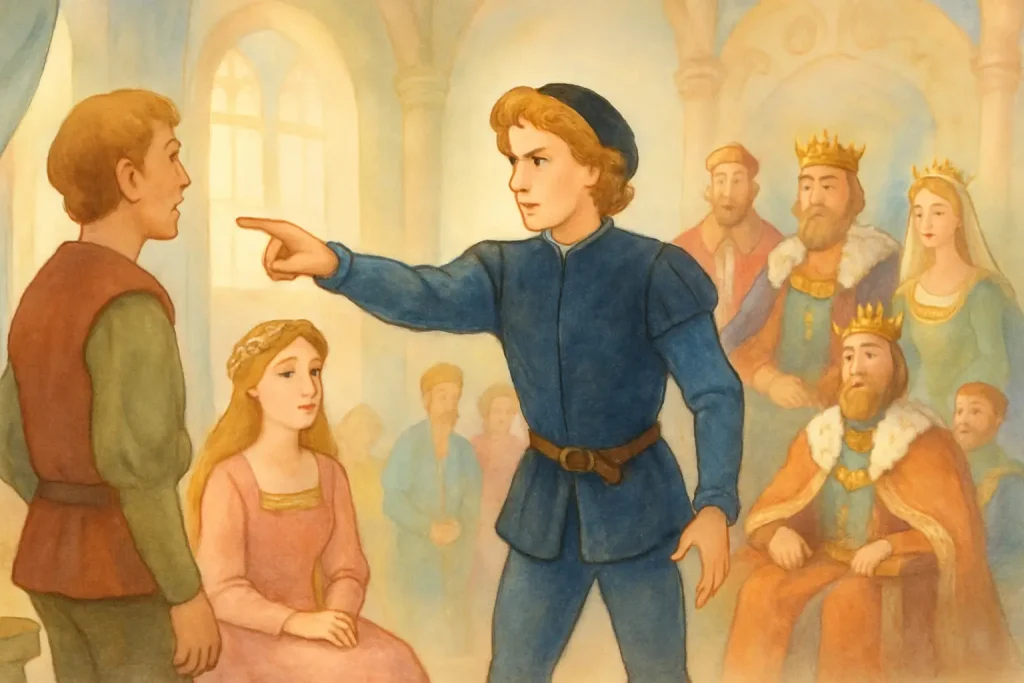
चित्र विवरण: एक भव्य यूरोपीय महल के हॉल में, हैमलेट मध्ययुगीन वस्त्रों में, मंच पर अभिनेता को निर्देश देता है; पास में ओफेलिया बैठी है, और अन्य दरबारी, राजा और रानी, शाही वस्त्रों में उपस्थित हैं।
Act 3 Scene 2
इस दृश्य में मुख्य पात्र हैं: हैमलेट (राजकुमार), ओफेलिया (पोलोनियस की बेटी), पोलोनियस (राज्य का मुख्य सलाहकार), रोसेनक्रांट्ज़ और गिल्डनस्टर्न (हैमलेट के मित्र), और रंगमंच के अभिनेता। हैमलेट अभिनेता को अभिनय के बारे में निर्देश देता है, और ओफेलिया के साथ व्यंग्यपूर्ण संवाद करता है। राजा और रानी भी मंच पर आते हैं।
| Hindi | English |
|---|---|
| [एक हॉल में।] | [A hall in the castle.] |
| [हैमलेट, किंग, क्वीन, पोलोनियस, ओफेलिया, रोसेनक्रांट्ज़, गिल्डनस्टर्न, और अन्य लोग प्रवेश करते हैं।] | [Enter HAMLET and Players.] |
| हैमलेट: | HAMLET: |
| बोलो, तुम सब तैयार हो? | Speak the speech, I pray you, as I pronounced it to you, trippingly on the tongue: |
| जैसा मैंने तुम्हें सिखाया था, वैसे ही बोलो, जीभ पर हल्केपन से। | but if you mouth it, as many of your players do, I had as lief the town-crier spoke my lines. |
| लेकिन अगर तुम उसे मुँहफट तरीके से बोलोगे, जैसा कि कई अभिनेता करते हैं, तो मुझे अच्छा लगेगा कि नगर का घोषक ही मेरी पंक्तियाँ बोले। | Nor do not saw the air too much with your hand, thus, but use all gently; |
| और अपने हाथ से हवा को ज़्यादा मत काटो, बल्कि सब कुछ धीरे-धीरे करो; | for in the very torrent, tempest, and, as I may say, whirlwind of your passion, you must acquire and beget a temperance that may give it smoothness. |
| क्योंकि अपने जोश के तूफ़ान, आंधी, और, जैसा मैं कहूँ, बवंडर में भी, तुम्हें संयम रखना चाहिए, जिससे उसमें कोमलता आ सके। | O, it offends me to the soul to hear a robustious periwig-pated fellow tear a passion to tatters, to very rags, to split the ears of the groundlings, who for the most part are capable of nothing but inexplicable dumb shows and noise: |
| ओ, मुझे आत्मा तक दुख होता है जब कोई मोटा-सा, नकली बालों वाला अभिनेता जोश को चिथड़ों में फाड़ देता है, भीड़ के कान फाड़ देता है, जो अधिकतर केवल इशारों और शोर को ही समझते हैं: | I would have such a fellow whipped for o’erdoing Termagant; it out-herods Herod: pray you, avoid it. |
| मैं ऐसे आदमी को ज़्यादा अभिनय करने के लिए कोड़े लगवाऊँगा; वह हेरोड से भी आगे निकल जाता है: कृपया, इससे बचो। | Be not too tame neither, but let your own discretion be your tutor: suit the action to the word, the word to the action; |
| लेकिन बहुत शांत भी मत हो, बल्कि अपनी समझदारी को अपना शिक्षक बनाओ: क्रिया को शब्द के अनुसार, और शब्द को क्रिया के अनुसार बनाओ; | with this special observance, that you o’erstep not the modesty of nature: for any thing so overdone is from the purpose of playing, whose end, both at the first and now, was and is, to hold, as ’twere, the mirror up to nature; |
| इस विशेष ध्यान के साथ कि तुम प्रकृति की मर्यादा को पार न करो: क्योंकि कोई भी चीज़ ज़्यादा करने से अभिनय का उद्देश्य खो जाता है, जिसका मकसद शुरू से ही प्रकृति के सामने दर्पण रखना था; | to show virtue her own feature, scorn her own image, and the very age and body of the time his form and pressure. |
| सद्गुण को उसका असली रूप दिखाना, उपहास को उसका चेहरा दिखाना, और समय के युग और शरीर को उसका आकार और दबाव दिखाना। | Now this overdone, or come tardy off, though it make the unskilful laugh, cannot but make the judicious grieve; |
| अब अगर यह ज़्यादा किया जाए, या ढीला किया जाए, तो भले ही अनाड़ी लोग हँसें, समझदार लोग दुखी होंगे; | the censure of the which one must in your allowance o’erweigh a whole theatre of others. O, there be players that I have seen play, and heard others praise, and that highly, not to speak it profanely, that, neither having the accent of Christians nor the gait of Christian, pagan, nor man, have so strutted and bellowed that I have thought some of nature’s journeymen had made men and not made them well, they imitated humanity so abominably. |
| जिनकी आलोचना तुम्हें बाकी पूरे रंगमंच से ज़्यादा माननी चाहिए। ओ, मैंने ऐसे अभिनेता देखे हैं, जिनकी लोग बहुत तारीफ करते हैं, लेकिन न तो उनमें ईसाइयों की बोली थी, न चाल, न ही किसी इंसान की, वे ऐसे अकड़ते और चिल्लाते थे कि मुझे लगा जैसे प्रकृति के किसी कारीगर ने इंसान बनाए हों, लेकिन अच्छे नहीं बनाए, क्योंकि वे मानवता की इतनी बुरी नकल करते थे। | Go, make you ready. |
| जाओ, तैयार हो जाओ। | Go, make you ready. |
| [अभिनेता चले जाते हैं।] | [Exeunt Players.] |
| [पोलोनियस, रोसेनक्रांट्ज़, और गिल्डनस्टर्न प्रवेश करते हैं।] | [Enter POLONIUS, ROSENCRANTZ, and GUILDENSTERN.] |
| हैमलेट: | HAMLET: |
| कैसे हो, मेरे अच्छे दोस्त? | How now, my lord! will the king hear this piece of work? |
| क्या राजा यह नाटक देखेंगे? | How now, my lord! will the king hear this piece of work? |
| पोलोनियस: | POLONIUS: |
| और रानी भी, और तुरंत। | And the queen too, and that presently. |
| हैमलेट: | HAMLET: |
| कहो, तुम सब तैयार हो? | Bid the players make haste. |
| पोलोनियस: | POLONIUS: |
| मैं उन्हें जल्दी बुलाता हूँ। | I will bring them in straight. |
| हैमलेट: | HAMLET: |
| क्या राजा और रानी तैयार हैं? | Will the king and queen come? |
| रोसेनक्रांट्ज़: | ROSENCRANTZ: |
| हाँ, वे आ रहे हैं। | Ay, they stay upon your patience. |
| हैमलेट: | HAMLET: |
| मैं उनके लिए तैयार हूँ। | Bid the players make haste. |
| गिल्डनस्टर्न: | GUILDENSTERN: |
| अभिनेता तैयार हैं। | The players are ready. |
| हैमलेट: | HAMLET: |
| अच्छा, उन्हें बुलाओ। | Bid them come in. |
| [पोलोनियस चला जाता है।] | [Exit POLONIUS.] |
| हैमलेट (ओफेलिया से): | HAMLET (to OPHELIA): |
| प्यारी ओफेलिया, क्या मैं तुम्हारे पास बैठ सकता हूँ? | Lady, shall I lie in your lap? |
| ओफेलिया: | OPHELIA: |
| नहीं, मेरे भगवान। | No, my lord. |
| हैमलेट: | HAMLET: |
| तुम्हारा क्या मतलब है? | I mean, my head upon your lap? |
| ओफेलिया: | OPHELIA: |
| हाँ, मेरे भगवान। | Ay, my lord. |
| हैमलेट: | HAMLET: |
| क्या तुमने सोचा कि मैं कुछ और कहना चाहता था? | Do you think I meant country matters? |
| ओफेलिया: | OPHELIA: |
| मुझे नहीं लगता, मेरे भगवान। | I think nothing, my lord. |
| हैमलेट: | HAMLET: |
| यह एक अच्छा विचार है कि कुछ भी न सोचना। | That’s a fair thought to lie between maids’ legs. |
| ओफेलिया: | OPHELIA: |
| क्या, मेरे भगवान? | What is, my lord? |
| हैमलेट: | HAMLET: |
| कुछ भी। | Nothing. |
| ओफेलिया: | OPHELIA: |
| आप बहुत खुश हैं, मेरे भगवान। | You are merry, my lord. |
| हैमलेट: | HAMLET: |
| कौन, मैं? | Who, I? |
| ओफेलिया: | OPHELIA: |
| हाँ, मेरे भगवान। | Ay, my lord. |
| हैमलेट: | HAMLET: |
| ओ भगवान, मैं बहुत उदास हूँ। | O God, your only jig-maker. What should a man do but be merry? For, look you, how cheerfully my mother looks, and my father died within these two hours. |
| ओफेलिया: | OPHELIA: |
| नहीं, यह दो घंटे से भी ज़्यादा हुआ। | Nay, ’tis twice two months, my lord. |
| हैमलेट: | HAMLET: |
| तो फिर, अब भी ताज़ा है। | So long? Nay then, let the devil wear black, for I’ll have a suit of sables. O heavens! die two months ago, and not forgotten yet? Then there’s hope a great man’s memory may outlive his life half a year: but, by’r lady, he must build churches, then; or else shall he suffer not thinking on, with the hobby-horse, whose epitaph is, ‘For, O, for, O, the hobby-horse is forgot.’ |
Search keywords: Hamlet, शेक्सपीयर, Hamlet नाटक, Hindi drama, Hamlet in Hindi, Hamlet play, Hindi Shakespeare
Author: William Shakespeare | Source: https://www.gutenberg.org/cache/epub/1524/pg1524.txt