
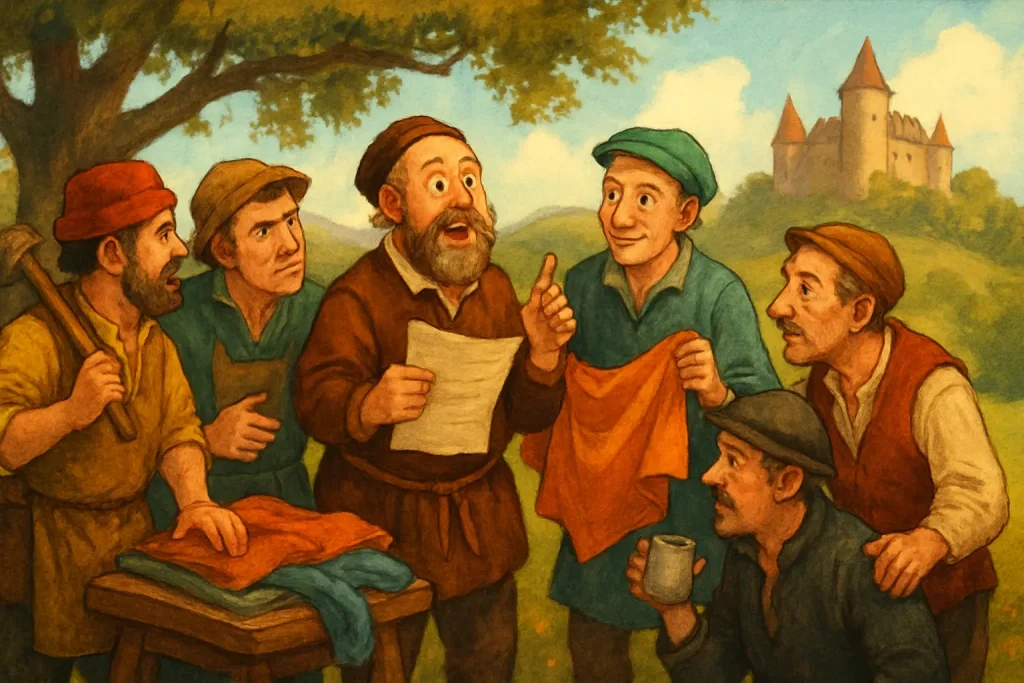
चित्र विवरण: एक पुराने यूरोपीय शहर के खुले मैदान में, छह साधारण कारीगर—बढ़ई, जुलाहा, दर्जी, टिनकर, बेलोज़-मेंडर और सुतार—मिलकर उत्साहपूर्वक नाटक की रिहर्सल की योजना बनाते हुए, उनके पास स्क्रिप्ट और रंगीन कपड़े हैं, पृष्ठभूमि में ओक के पेड़ और दूर महल की झलक।
Act 1 Scene 2
इस दृश्य में मुख्य पात्र हैं:
– पीटर क्विंस (बढ़ई): नाटक के निर्देशक और आयोजक।
– निक बॉटम (जुलाहा): उत्साही अभिनेता, जो हर भूमिका निभाना चाहता है।
– फ्रांसिस फ्लूट (बेलोज़-मेंडर): जिसे महिला पात्र निभाने के लिए चुना गया है।
– रॉबिन स्टारवलिंग (दर्जी), टॉम स्नाउट (टिनकर), और स्नग (सुतार): अन्य साथी, जिन्हें विभिन्न सहायक भूमिकाएँ दी गई हैं।
ये सभी मिलकर ड्यूक के विवाह के लिए एक नाटक की योजना बना रहे हैं।
| Hindi | English |
|---|---|
| [एथेंस के एक सार्वजनिक स्थान पर प्रवेश करते हैं QUINCE (बढ़ई), SNUG (सुतार), BOTTOM (जुलाहा), FLUTE (फूटी), SNOUT (टिनकर), और STARVELING (दर्जी)] | [Enter QUINCE the carpenter, SNUG the joiner, BOTTOM the weaver, FLUTE the bellows-mender, SNOUT the tinker, and STARVELING the tailor.] |
| QUINCE: यहाँ आओ, अच्छे साथी, जल्दी आओ। | QUINCE: Is all our company here? |
| BOTTOM: पीटर क्विंस, क्या हमारी पूरी मंडली यहाँ है? | BOTTOM: You were best to call them generally, man by man, according to the scrip. |
| QUINCE: यहाँ मैं सूची पढ़ता हूँ। इस नाटक के लिए, जिसे हम ड्यूक के विवाह की रात को उनके सामने खेलेंगे। | QUINCE: Here is the scroll of every man’s name, which is thought fit, through all Athens, to play in our interlude before the duke and the duchess, on his wedding-day at night. |
| BOTTOM: पहले, अच्छे पीटर क्विंस, नाटक का विषय क्या है? | BOTTOM: First, good Peter Quince, say what the play treats on; then read the names of the actors; and so grow to a point. |
| QUINCE: यह नाटक है, “पिरामस और थीस्बे की बहुत दुखद और सबसे क्रूर मृत्यु।” | QUINCE: Marry, our play is, “The most lamentable comedy, and most cruel death of Pyramus and Thisby.” |
| BOTTOM: बहुत अच्छा, मित्र। एक बहुत अच्छा नाटक, निश्चय ही, और बहुत मज़ेदार। अब, अच्छे पीटर क्विंस, नाम पढ़ो। | BOTTOM: A very good piece of work, I assure you, and a merry. Now, good Peter Quince, call forth your actors by the scroll. Masters, spread yourselves. |
| QUINCE: उत्तर दो, जैसा मैं तुम्हारा नाम पुकारूँ। निक बॉटम, जुलाहा। | QUINCE: Answer as I call you. Nick Bottom, the weaver. |
| BOTTOM: यहाँ, पीटर क्विंस। | BOTTOM: Ready. Name what part I am for, and proceed. |
| QUINCE: तुम, निक बॉटम, पिरामस का पात्र निभाओगे। | QUINCE: You, Nick Bottom, are set down for Pyramus. |
| BOTTOM: कौन है पिरामस? एक प्रेमी या एक तानाशाह? | BOTTOM: What is Pyramus? A lover, or a tyrant? |
| QUINCE: एक प्रेमी, जो बहुत दुख के साथ मर जाता है। | QUINCE: A lover, that kills himself most gallant for love. |
| BOTTOM: यह बहुत अच्छा है, एक प्रेमी की भूमिका रोने के लिए उपयुक्त है। मैं आँसू बहा सकता हूँ, अगर मुझे चाहिए, बहुत अच्छा। भूमिका निभाओ, “पिरामस, बहुत प्रिय थीस्बे!” बहुत अच्छा। अब, तानाशाह की भूमिका सुनो: “हेरोड, हेरोड!” बहुत अच्छा। प्रेमी की भूमिका रोने के लिए उपयुक्त है, और तानाशाह की भूमिका गरजने के लिए। | BOTTOM: That will ask some tears in the true performing of it. If I do it, let the audience look to their eyes; I will move storms, I will condole in some measure. To the rest: yet my chief humour is for a tyrant. I could play Ercles rarely, or a part to tear a cat in, to make all split. The raging rocks And shivering shocks Shall break the locks Of prison gates; And Phibbus’ car Shall shine from far, And make and mar The foolish Fates. This was lofty! Now name the rest of the players. This is Ercles’ vein, a tyrant’s vein; a lover is more condoling. |
| QUINCE: फ्रांसिस फ्लूट, बेलोज़-मेंडर। | QUINCE: Francis Flute, the bellows-mender. |
| FLUTE: यहाँ, पीटर क्विंस। | FLUTE: Here, Peter Quince. |
| QUINCE: तुम, फ्लूट, थीस्बे का पात्र निभाओगे। | QUINCE: Flute, you must take Thisby on you. |
| FLUTE: क्या थीस्बे कोई पुरुष है या महिला? | FLUTE: What is Thisby? A wandering knight? |
| QUINCE: यह एक महिला है, जो पिरामस से प्रेम करती है। | QUINCE: It is the lady that Pyramus must love. |
| FLUTE: ओह, मुझे महिला पात्र न दो, क्योंकि मेरी दाढ़ी अभी निकलने लगी है। | FLUTE: Nay, faith, let me not play a woman; I have a beard coming. |
| QUINCE: वह कोई बात नहीं; तुम एक नकली चेहरा पहन सकते हो। | QUINCE: That’s all one; you shall play it in a mask, and you may speak as small as you will. |
| BOTTOM: और मैं भी थीस्बे का पात्र निभा सकता हूँ। मैं एक बहुत छोटी आवाज़ में बोल सकता हूँ: “थीस्बे, थीस्बे!” | BOTTOM: And I may hide my face, let me play Thisby too. I’ll speak in a monstrous little voice: “Thisne, Thisne!”—“Ah, Pyramus, my lover dear! thy Thisby dear, and lady dear!” |
| QUINCE: नहीं, नहीं; तुम पिरामस का पात्र निभाओगे; और, फ्लूट, तुम थीस्बे का पात्र निभाओगे। | QUINCE: No, no; you must play Pyramus: and, Flute, you Thisby. |
| BOTTOM: अच्छा, आगे बढ़ो। | BOTTOM: Well, proceed. |
| QUINCE: रॉबिन स्टारवलिंग, दर्जी। | QUINCE: Robin Starveling, the tailor. |
| STARVELING: यहाँ, पीटर क्विंस। | STARVELING: Here, Peter Quince. |
| QUINCE: तुम थीस्बे की माँ का पात्र निभाओगे। | QUINCE: Robin Starveling, you must play Thisby’s mother. |
| TOM SNOUT: क्या मैं भी सूची में हूँ? | TOM SNOUT: Tom Snout, the tinker. |
| QUINCE: तुम पिरामस के पिता का पात्र निभाओगे; स्नग, सुतार, तुम थीस्बे के पिता का पात्र निभाओगे; मैं, पीटर क्विंस, पिरामस की माँ का पात्र निभाऊँगा। | QUINCE: You, Pyramus’s father; myself, Thisby’s father; Snug, the joiner, you, the lion’s part: and, I hope, here is a play fitted. |
| SNUG: क्या मुझे शेर का पात्र याद करना होगा? | SNUG: Have you the lion’s part written? Pray you, if it be, give it me, for I am slow of study. |
| QUINCE: तुम्हें कुछ भी याद नहीं करना है, बस दहाड़ना है। | QUINCE: You may do it extempore, for it is nothing but roaring. |
| BOTTOM: मुझे भी शेर का पात्र निभाने दो। मैं शेर की तरह दहाड़ सकता हूँ, मैं किसी भी आदमी के दिल को डर से पिघला सकता हूँ। | BOTTOM: Let me play the lion too: I will roar, that I will do any man’s heart good to hear me; I will roar, that I will make the duke say, “Let him roar again, let him roar again.” |
| QUINCE: अगर तुम बहुत जोर से दहाड़ोगे, तो तुम डचेस और सभी महिलाओं को डरा दोगे, कि वे चिल्ला उठेंगी; और फिर, शायद, हमें फाँसी दे दी जाए। | QUINCE: An you should do it too terribly, you would fright the duchess and the ladies, that they would shriek; and that were enough to hang us all. |
| BOTTOM: अगर मैं शेर का पात्र निभाऊँ, तो मैं बहुत कोमलता से दहाड़ूँगा, जैसे कोई कबूतर करता है; मैं बहुत मीठी आवाज़ में दहाड़ूँगा। | BOTTOM: I will aggravate my voice so, that I will roar you as gently as any sucking dove; I will roar you an ’twere any nightingale. |
| QUINCE: तुम पिरामस का पात्र निभाओगे। | QUINCE: You can play no part but Pyramus; for Pyramus is a sweet-faced man; a proper man, as one shall see in a summer’s day; a most lovely gentleman-like man: therefore you must needs play Pyramus. |
| BOTTOM: अच्छा, मैं उसे निभाऊँगा। | BOTTOM: Well, I will undertake it. What beard were I best to play it in? |
| QUINCE: जो दाढ़ी तुम्हें सबसे अच्छी लगे। | QUINCE: Why, what you will. |
| BOTTOM: मैं उसे एक भूरे रंग की दाढ़ी में निभाऊँगा, या एक भूरे रंग की दाढ़ी में, जो थोड़ा रेखांकित हो, या एक पीली दाढ़ी में, या एक फ्रेंच कट दाढ़ी में, या आपकी इच्छा के अनुसार। | BOTTOM: I will discharge it in either your straw-colour beard, your orange-tawny beard, your purple-in-grain beard, or your French-crown-colour beard, your perfect yellow. |
| QUINCE: कुछ भी हो, साथी, हर आदमी को अपनी भूमिका याद करनी चाहिए, और कल रात ओक के जंगल में ड्यूक के ओक के पास मिलना चाहिए। वहाँ हम अभ्यास करेंगे; क्योंकि अगर हम शहर में मिलेंगे, तो लोग हमें परेशान करेंगे, और हमारी योजना उजागर हो जाएगी। | QUINCE: Some of your French crowns have no hair at all, and then you will play bare-faced. But, masters, here are your parts: and I am to entreat you, request you, and desire you, to con them by to-morrow night; and meet me in the palace wood, a mile without the town, by moonlight; there will we rehearse, for if we meet in the city, we shall be dogged with company, and our devices known. In the meantime I will draw a bill of properties, such as our play wants. I pray you, fail me not. |
| BOTTOM: हम वहाँ होंगे, और समय पर होंगे। | BOTTOM: We will meet; and there we may rehearse most obscenely and courageously. Take pains; be perfect; adieu. |
| QUINCE: याद रखो, हर आदमी को अपनी भूमिका याद करनी है, और समय पर आना है। | QUINCE: At the duke’s oak we meet. |
| BOTTOM: हम वहाँ होंगे, बहादुरी से। | BOTTOM: Enough; hold or cut bow-strings. |
| [वे सब चले जाते हैं] | [Exeunt] |
Search keywords: A Midsummer Night’s Dream, शेक्सपीयर, A Midsummer Night’s Dream नाटक, Hindi drama, A Midsummer Night’s Dream in Hindi, A Midsummer Night’s Dream play, Hindi Shakespeare
Author: William Shakespeare | Source: https://www.gutenberg.org/cache/epub/1522/pg1522.txt